The moves are bigger, the stakes are higher, and the world gets weirder in these massive expansions for Monster of the Week.
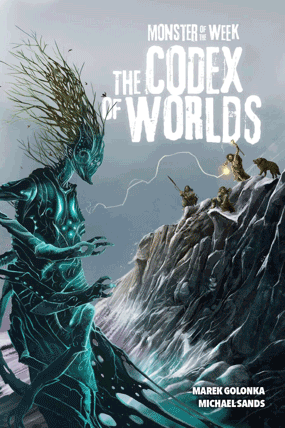
The Codex of Worlds (416pp, retail price $20) brings different styles and fresh settings to your MotW games. Unite your party of Hunters with new Team playbooks and take your supernatural adventures into new genres. Fight monsters together as mercenaries, suburban watch groups, whistleblowers, the Agents in Black, Guardians of the Borderland, or the galaxy-guarding Interdimensional Crisis Team. Road-trip against evil as a Touring Band. Avenge your community and your loved ones as the Last Survivors! And leave the modern world behind with new setting frameworks in medieval fantasy, the Gothic Century, an alternate Renaissance, and the Stone Age.
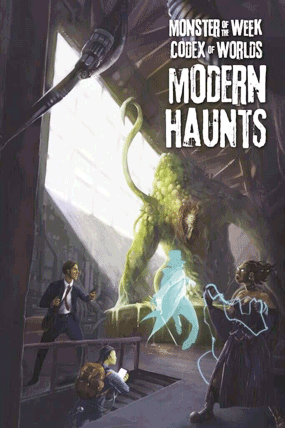
Modern Haunts (61pp, retail $10): Introduced in the Gothic Century chapter of Codex of Worlds, a haunt is a phenomenon served by other minions, and to dispel the phenomenon for good, the hunters must first neutralize those preliminary threats. These Modern Haunts touch upon themes of activism, ecology, hate speech, war, and other current problems.
Apocrypha (210pp, retail $15): Add new playbooks (Curse-Eater, Army of One, Doomed World Exile, Storied Hunter Lineage), new Mysteries (Ravenous Fire, the Dreaming Army, the Broken Door), the new mini-mystery "Case Closed" format that lets you complete an MotW game in half and hour, and a full-length funnel-style prelude adventure by Michael Sands, "Wait, Monsters Are Real?"
Learn more at the February 2023 BackerKit campaign page.

 Adventurer! This new Monster Hunters of the Week Bundle presents .PDF ebooks of the
  And if you pay more than the threshold price of $29.44, you'll level up and also get our entire Keeper Collection with five more titles worth an additional $67, including the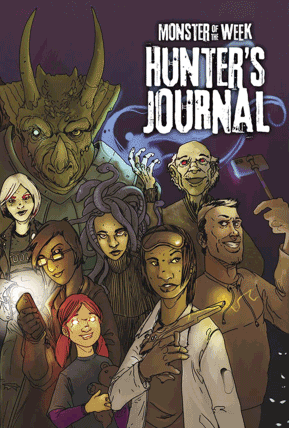
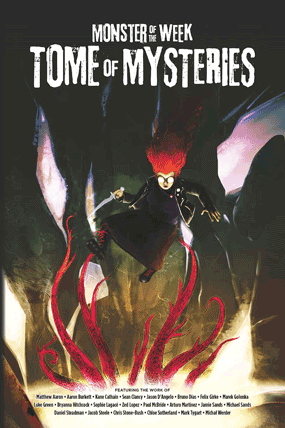
Spread the word!
Get your gang to become Monster Hunters